
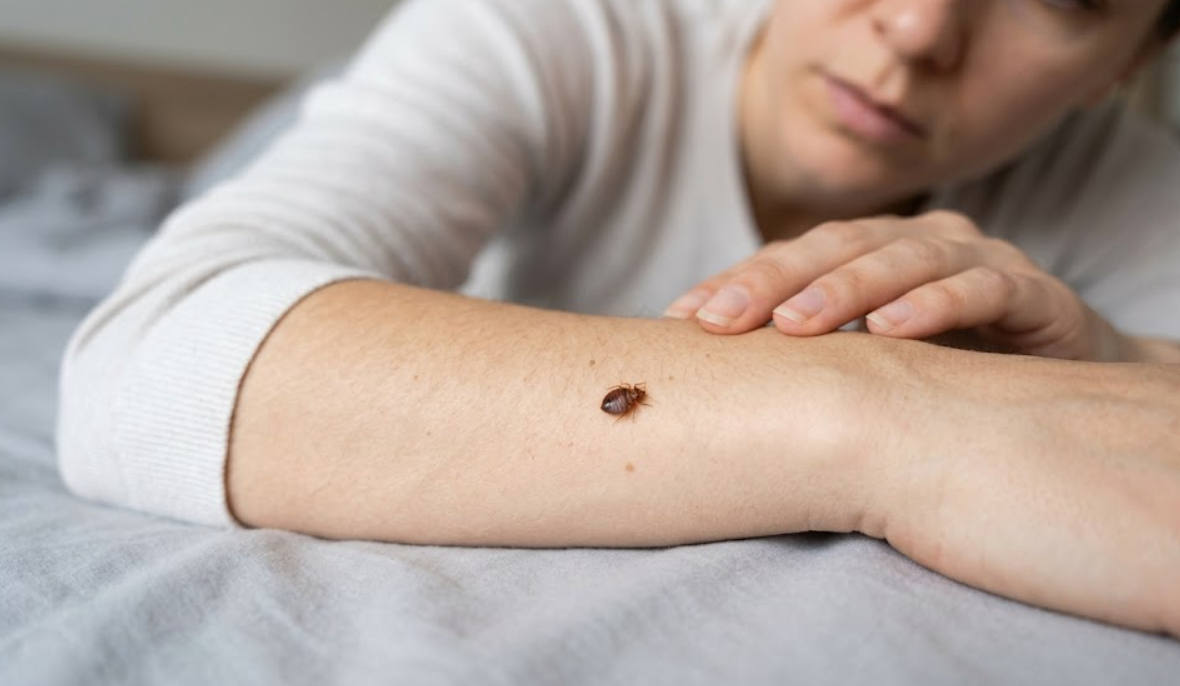
Many people who discover bed bug bites in their home notice something puzzling.
One person may wake up covered in bites, while another sleeping in the same room appears untouched. This often leads to the question: do bed bugs prefer certain people?
The short answer is yes, but not in the way many people think. Bed bugs are attracted by biological factors such as body heat, carbon dioxide, and skin chemistry rather than personal cleanliness, blood type alone, or lifestyle choices.
Understanding what attracts bed bugs can help explain why some individuals seem to be bitten more often than others.
How Bed Bugs Find Their Hosts
Bed bugs are highly skilled at locating sleeping humans. Unlike mosquitoes, which can fly to their targets, bed bugs crawl from their hiding places and rely on a combination of sensory cues to find a blood meal.
The primary signals they use include:
- Carbon dioxide produced by breathing
- Body heat
- Human scent and skin odours
- Chemical compounds released through sweat
These cues help bed bugs identify where people are sleeping, particularly during the night when they are most active.
The Role of Carbon Dioxide
One of the strongest attractants for bed bugs is carbon dioxide (CO₂). Every person exhales carbon dioxide continuously, but larger individuals and those with higher metabolic rates may produce slightly more.
Research has shown that bed bugs can detect carbon dioxide from a distance and use it to locate potential hosts. This means that people who naturally produce more CO₂ may attract bed bugs more readily than others.
However, carbon dioxide is only one part of the equation. Once bed bugs get closer, they rely on additional signals to choose where to feed.
Does Body Heat Make a Difference?
Body heat is another important factor. Bed bugs are naturally drawn to warm-blooded hosts, and heat helps them pinpoint exposed skin once they approach a sleeping person.
People who naturally have a higher skin temperature may be slightly more attractive to bed bugs. Similarly, those who sleep warmer or use heavy bedding may create stronger heat signatures that help bed bugs locate them.
That said, even cooler sleepers are still suitable hosts. Heat influences attraction, but it does not prevent bed bugs from feeding on other people in the room.
Skin Chemistry and Personal Scent
Perhaps the most significant reason some people receive more bites than others is skin chemistry.
Human skin naturally produces hundreds of chemical compounds through sweat, oils, and microbial activity. These compounds create each person’s unique scent profile.
Studies suggest that bed bugs can detect and respond differently to these chemical signatures. Certain combinations of skin bacteria and natural body odours may be more attractive to bed bugs than others.
This is similar to the way mosquitoes appear to favour certain individuals. While the exact chemicals involved are still being studied, skin chemistry is believed to play a major role in host preference.
What About Blood Type?
The idea that bed bugs prefer specific blood types has circulated for years, but scientific evidence remains limited.
Some small studies have suggested that bed bugs may show a preference for people with certain blood types, particularly Type O. However, the findings are not strong enough to conclude that blood type is a major factor in real-world infestations.
Most pest professionals consider carbon dioxide, body heat, and skin chemistry to be far more important influences.
Why Does One Person Get Bitten More Than Another?
There are several reasons why one household member may appear to be the bed bugs’ favourite target:
Different Levels of Attraction
As discussed, some individuals naturally produce stronger attractants through their body heat, breathing patterns, or skin chemistry.
Bite Reactions Vary
Not everyone reacts to bed bug bites in the same way. Some people develop obvious red, itchy welts within hours, while others show little or no visible reaction.
In households where one person reacts strongly and another shows no symptoms, it can appear as though only one person is being bitten when both are actually feeding hosts.
Sleeping Position
Bed bugs often emerge from hiding places near the bed. A person sleeping closer to an infested headboard, bedside table, or mattress seam may be bitten more frequently simply because they are easier to reach.
Do Bed Bugs Prefer Dirty People?
No, bed bugs are not attracted to dirt, poor hygiene, or unclean homes.
They feed exclusively on blood and are interested in people, not cleanliness levels.
Bed bug infestations can occur in luxury hotels, spotless homes, student accommodation, hospitals, and public transport. Cleanliness has little impact on whether bed bugs are attracted to a person.
Can You Make Yourself Less Attractive to Bed Bugs?
Unfortunately, there is no proven way to alter your body chemistry enough to stop bed bugs from feeding.
Unlike mosquitoes, for which some repellents can provide temporary protection, bed bugs are persistent indoor pests that live close to their hosts. If they are present, they will usually find a way to feed.
The most effective solution is professional treatment to eliminate the infestation rather than attempting to change personal habits or use unproven remedies.
The Bottom Line
Bed bugs do appear to prefer certain people, but their choices are influenced by biology rather than personal characteristics. Carbon dioxide, body heat, skin chemistry, and natural body odours all play a role in determining which hosts are most attractive.
However, even if one person receives more bites than others, bed bugs are opportunistic feeders and will happily feed on multiple people within a property. Because bite reactions vary significantly between individuals, visible bites are not always a reliable indicator of who is being targeted.
If bed bugs are present, professional inspection and treatment remain the most effective way to stop bites and eliminate the infestation completely.
Frequently Asked Questions (FAQs)
Do bed bugs prefer certain people over others?
Bed bugs do not strictly prefer one person over another, but they are attracted to cues such as body heat, carbon dioxide, and skin chemicals, which can vary slightly between individuals.
Are bed bugs attracted to body heat?
Yes, bed bugs are strongly attracted to body heat. It helps them locate a nearby host, especially at night when people are sleeping and exposed skin is accessible.
Do skin chemistry and blood type affect bed bug bites?
There is no strong scientific evidence that blood type determines attraction, but differences in skin odours, sweat composition, and body chemistry may influence how often someone is bitten.
Why do some people get bitten more than others in the same room?
This is usually due to differences in how bed bugs detect and respond to signals like carbon dioxide output, body temperature, sleeping position, or exposed skin rather than true preference.
Can bed bugs sense carbon dioxide from humans?
Yes, bed bugs use carbon dioxide exhaled by humans as one of their primary signals to locate a host, particularly in dark environments like bedrooms.
Do bed bugs bite everyone in a household?
Not always. Some people may not react to bites, making it seem like they are not being bitten, while others may show visible marks and irritation even from a few bites.
How can I reduce bed bug bites at night?
Reducing clutter, encasing mattresses, and eliminating infestations through professional treatment are the most effective methods. Repellents and home remedies are not reliable long-term solutions.